

Rift Plate 020 · Lantern Codex
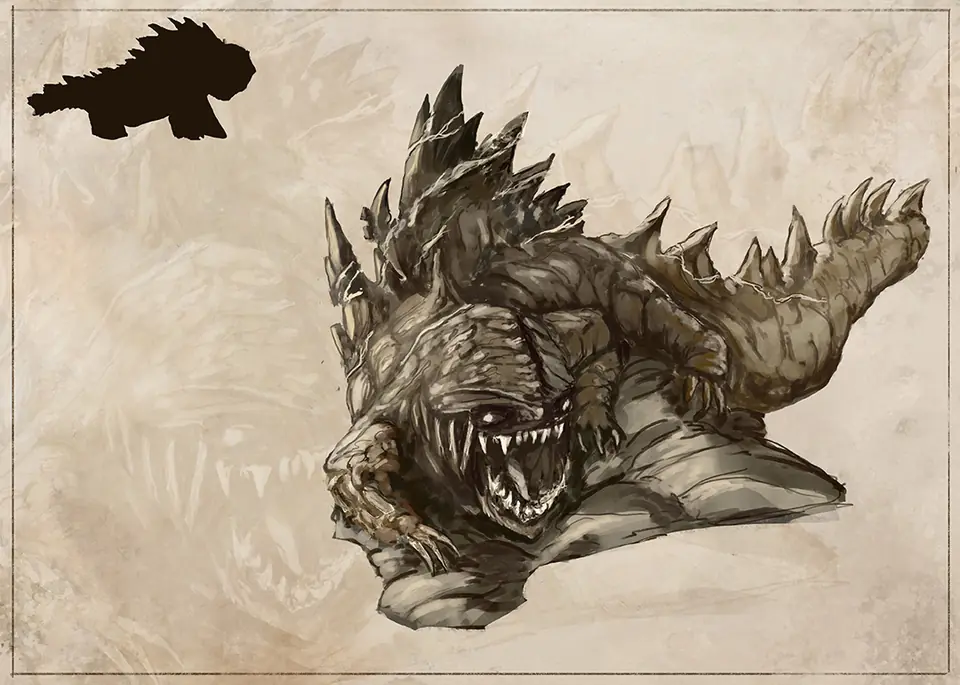
Riftscale Salamander
A broad elemental salamander attacks weight and structure, charging until the landscape fails around its target.
- Plate group
- Lantern Codex
- Classification
- Elemental
- Field account
- Recovered
Recovered natural history
Field record
Boiled spring tracks
Orange glass stood in beads inside the tracks. The red-clay spring around them had boiled dry.
A salamander as broad as a church pew emerged, furnace light under its black scales. It passed over the nearest body as a target. The heaviest structure in sight drew the charge. That was what it meant to bring down.
Weight response
Weight draws it more reliably than blood. Wagon axles and heavy footfalls can provoke it, as can hammering or falling masonry. It waits under mud or shallow water before committing to a long, straight rush. Cooling rain makes it more cautious. It can still charge.
Read the environment
Signs of its presence
Rain hisses on stone that's cool to the hand.
Five-toed tracks contain beads of fresh orange glass.
Creek water smells of pennies and wet brick, with sulfur beneath.
Survival doctrine
Field precautions
01
Find cold current
Sustained running water takes heat from the scale seams faster than the core can replace it.
02
Move across the charge
Move sideways once the shoulders commit. The longer the rush, the more costly and inaccurate its attempt to follow.
Recovered Field Plate
01
Primary form
A broad salamander profile is armored by jagged dorsal crystals and a heavily plated jaw.
02
Detail studies
The enlarged head study emphasizes the teeth, layered cheek plates, and rising crown of scales.
Continue through the folio
020 of 100 recovered plates